THE LIVING LOOP LAB IS HIRING CREW
Live the Great American Loop.
Do real science along the way.
Join the crew of ME VA for the opening stretch of the Living Loop Lab: the Gulf Coast, the Florida Keys, the Dry Tortugas, and Florida’s Atlantic coast up to Jacksonville.
Work alongside scientists, conservation groups, and universities.
We launch from Mobile Bay in December 2026.
THE EXPEDITION REALITY
Real water.
Real science.
Real you.
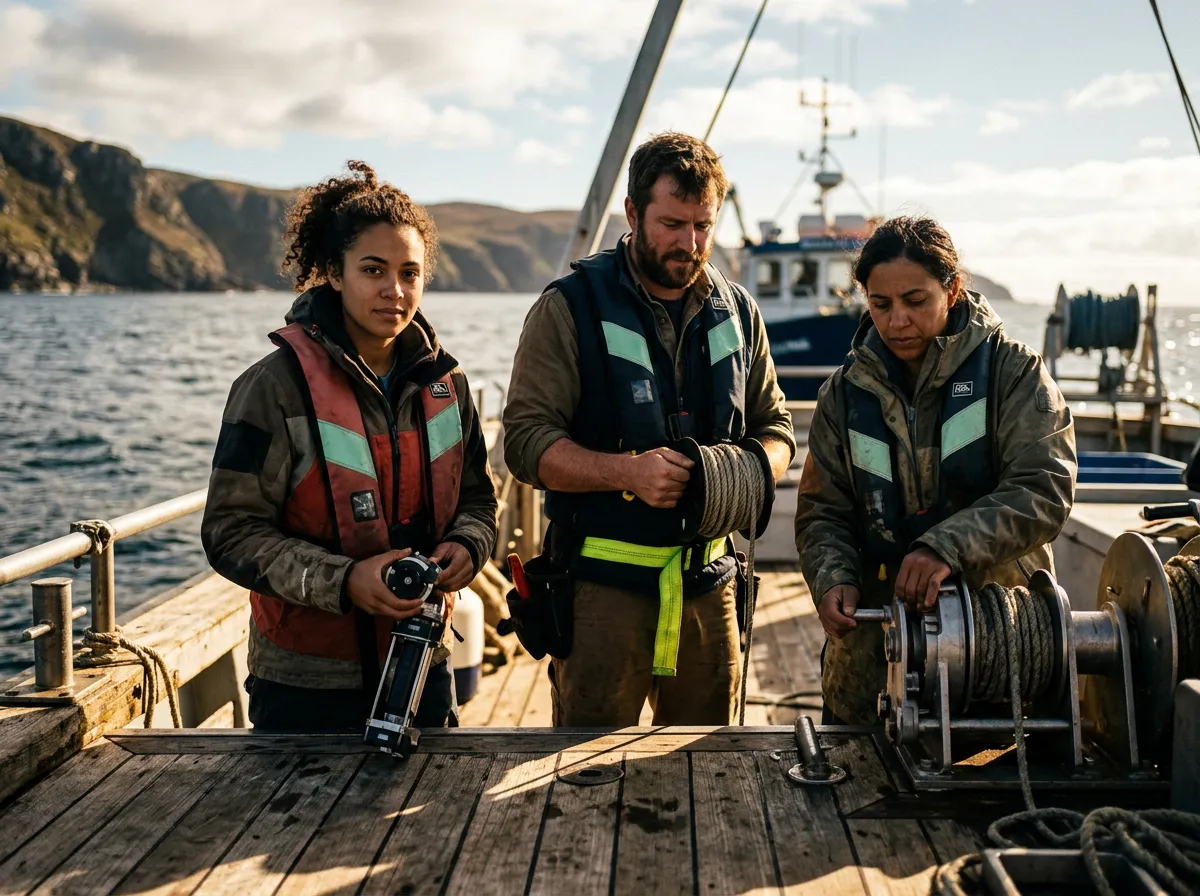
Most people read about science. You'll do it. On this crew you'll drag plankton nets through rivers, estuaries, and coastal waters, then look through a microscope for the organisms behind harmful algal blooms. You'll test the water, log every sample, and trace what you find back to the land upstream, using NOAA's Phytoplankton Monitoring Network protocols. Scientists will join us aboard along the way, and you'll work next to them and the young people we meet in every port. It's real data, from real water, across more than 6,000 miles. A typical gap year doesn't come close.

Photo: sample collection for water quality
THE CREW DUALITY
Half deckhand.
Part field scientist.
All in on Teaching the next generation.
On The Boat
Handle docking, fueling, and engine maintenance alongside the captain
Keep the boat clean, organized, and ready to go
Follow and help maintain our safety protocols, every day, for everyone aboard

In the science
Collect plankton samples, run water quality tests, and examine samples under the microscope
Log, photograph, and record every sample following NOAA's Phytoplankton Monitoring Network protocols
Support visiting scientists when they join us aboard

With Students & Communities
Welcome students and visitors aboard and guide them through hands-on science
Keep young people safe and engaged while they're on the boat
Coordinate our Current Keepers citizen-science network and help run education outreach in each port
The boat isn’t always moving, and we’re in no hurry. Some days are for docking, fueling, and sampling the water. Some are for outreach in port. Plenty are for exploring: we plan to paddle, bike, fish, and wander every place we stop. It’s a working expedition, and it’s also an adventure you’ll remember.
Whats covered day to day
Room and board come with the role, so your daily life aboard ME VA is taken care of.
A shared, dedicated berth aboard the boat
Groceries for the boat are covered. (Cooking and cleanup are shared by the crew, and specialty foods or extras are on you.)
Filtered drinking water on board
Boat safety equipment on board, and a safety walkthrough when you start
$200/mo Stipend
What to bring: your own properly fitting life jacket, plus clothing for the weather. We'll send a short packing list once you're on the crew.
Long-Term Gains
What you carry with you when the Loop is done.
Sea time toward a captain's license. Days underway on the Loop can count toward the Coast Guard's sea service requirement, and we'll help you log them properly from day one. The exam and other licensing steps are yours to complete afterward.
Hands-on boat skills. Docking, fueling, and engine maintenance, learned on a working vessel with a captain beside you.
Field science experience. Plankton sampling, water testing, and microscope work using NOAA Phytoplankton Monitoring Network protocols.
Education and outreach experience. Coordinating Current Keepers and working with students and communities in ports across the country.
A network built in person. Working relationships with scientists, conservation groups, agricultural and extension programs, and colleges and universities along the route.
A chance to grow your role. Help bring in sponsors or grants and your stipend grows with the funding. We're also working to raise funds for dive certification and want to include you.
LET'S BE STRAIGHT WITH YOU
This is an intense, immersive apprenticeship - not a salaried commercial gig or a vacation cruise. You trade sweat, vigilance, and field discipline for genuine maritime mastery and field science credibility that cannot be bought in a lecture hall.
RESEARCH ECOSYSTEM & WORKING ALLIANCES
From soil to sea, you'll be
in the room.
The Living Loop Lab follows one question down 6,000+ miles of waterway: how does what happens on the land, especially agricultural runoff, shape the health of our rivers, estuaries, and coasts? Along the way we sample the water, watch for harmful algal blooms, and map what we find against land use upstream. Our sampling follows NOAA's Phytoplankton Monitoring Network protocols, so what you collect adds to an established national monitoring effort, not a one-off project.
Who you'll work with
NOAA Phytoplankton Monitoring Network: the national citizen-science program whose protocols guide our water sampling and bloom monitoring
NOAA Marine Debris Program: the shoreline debris monitoring our Current Keepers take part in
Eckerd College Marine Science Program (St. Petersburg, FL): college-level marine science, with student involvement and data-sharing in development
UF IFAS Extension / Florida Sea Grant (Martin and St. Lucie Counties): local science and community education in Florida
VELA, Miles4theMinds, and EnrollEdge Marketing: supporters of our education and outreach work
Many more partners as we move through the loop!
More partners are joining as the route develops. Scientists will come aboard along the way, and in every port you'll meet the people who study and protect those waters.
CREW QUALIFICATIONS
Curious. Capable.
Ready to get wet.
We are not assembling passengers. We are staffing a working field laboratory where every individual pulls dock lines, monitors telemetry, and stays level-headed in heavy weather.
CRITICAL CRITERIA
Must-Have Baseline
Every crew member aboard the Me Va must demonstrate these competencies prior to departure. Non-negotiable readiness keeps the expedition safe and productive.
- Active dedication to marine conservation, freshwater ecology, or scientific exploration
- Confident swimmer proven comfortable in open water, current swells, and working around tenders
- Valid driver's license with clean operating record for shore-side equipment transit and logistics
- Demonstrated stamina for long physical days on wet decks, heavy gear management, and variable shifts
- Clear, ego-free communication style that thrives inside tight quarters and high-trust crew dynamics
DESIRABLE SKILLS
A Definite Plus
Hands-on experience in small vessel navigation, basic diesel systems troubleshooting, field water sampling protocols, aerial drone cinematography, or wilderness medical certification (WFR/WFA). These capabilities fast-track leadership roles on survey teams.
TIME ABOARD
Commitment
This opening covers the first stretch of the Loop, from Mobile Bay through the Gulf, the Keys, and Florida’s east coast to Jacksonville, roughly December through March. Tell us your availability in the application.
Review cycle closes once all expedition bunks are assigned.
CREW ROSTER // FINAL BERTHS
Your seat on the crew
is open.
Tell us who you are and why the water calls you. We review every dossier by hand and dispatch responses within four tide cycles.




Cultivating Currents : Cultivating the future, one waterway at a time.
A registered 501(c)(3) nonprofit · [email protected] · 877-810-1015
© 2026 Cultivating Currents. All rights reserved.